

Old East Dallas
Dallas, Texas
JC Carter at Douglas Elliman Real Estate
Swiss Avenue and the streetcar suburbs
Victorian, Prairie and Craftsman houses in the historic districts just east of downtown.
Old East Dallas began as its own town. East Dallas incorporated around the new railroads in 1882 and joined Dallas in 1890. Streetcar lines connected it to downtown by 1893. The neighborhoods it left, just east of downtown and north of Fair Park, hold some of the oldest planned streets in the city.
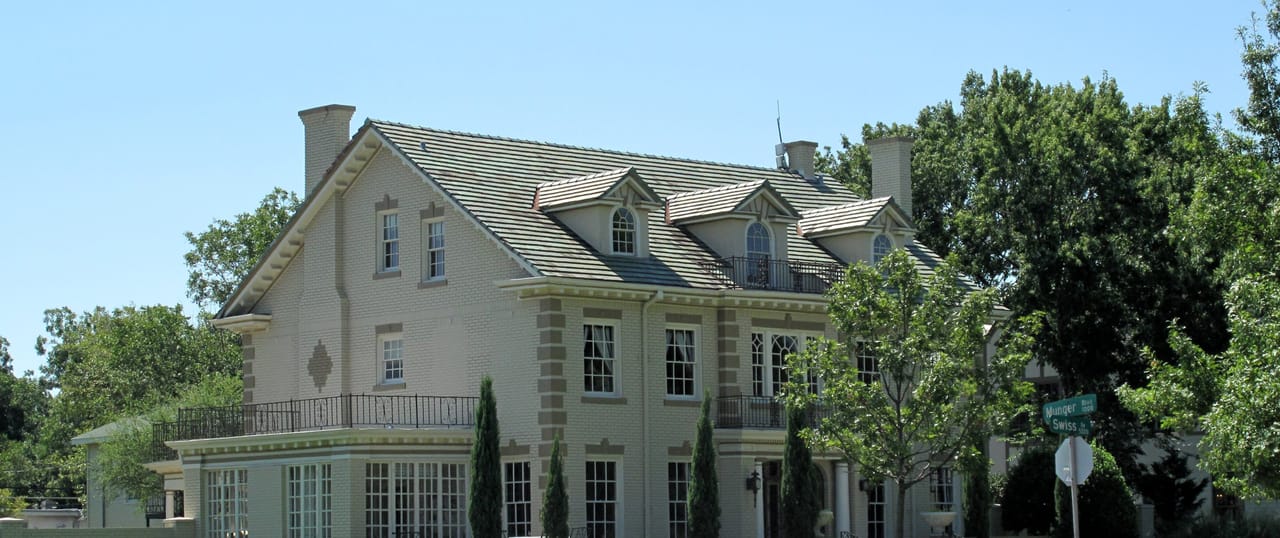
Munger Place, laid out in 1905 by the Munger brothers, was an early deed-restricted subdivision. Its more than 200 houses are the largest intact group of Prairie-influenced buildings in North Texas. Swiss Avenue became the city’s first local historic district in 1973. Peak’s Suburban Addition, which grew from Jefferson Peak’s 1855 farmhouse, keeps Victorian houses and 1920s and 1930s streetcar apartments. Junius Heights, a 1906 streetcar development, has more than 800 Craftsman, Prairie and Tudor houses.
Baylor University Medical Center, founded on Gaston Avenue in 1903 as a 25-bed sanitarium, is the area’s largest institution. Bryan Place, rebuilt in the 1980s, sits at the edge of the Arts District.
Now in Old East Dallas
Renovating Baylor’s Roberts Tower
Baylor University Medical Center’s renovation of Roberts Tower, at 3500 Gaston Avenue, includes a new intermediate care unit on the 17th floor and refurbished patient floors.
A trail on Ross Avenue
The city has funded a 1.77-mile trail along Ross Avenue from I-345 to Greenville Avenue. In October 2026 its design was 60 percent complete, with a 2028 target.
A new park at Fair Park
In August 2026 the city council approved up to $3 million toward the Community Park at Fair Park, a 10.5-acre park at the center of the Fair Park master plan, with completion planned for December 2028.
Homes and buildings
Swiss Avenue
About 200 houses in revival, Prairie and bungalow styles line Swiss Avenue from Fitzhugh Street to just north of La Vista, a Dallas landmark district since 1973 and on the National Register since 1974.
Munger Place
More than 200 houses from the 1905 subdivision form the largest intact collection of Prairie-influenced buildings in North Texas, a Dallas landmark district since 1988.
Peak’s and Junius Heights
Peak’s Suburban Addition has one of the highest concentrations of Victorian houses in Dallas, and Junius Heights more than 800 Craftsman, Prairie and Tudor houses; both are city historic districts.
Questions about Old East Dallas
Where is Old East Dallas?
Just east of downtown Dallas, north of Fair Park. It is the oldest part of East Dallas, a town incorporated in 1882 and annexed by Dallas in 1890, and it holds the Swiss Avenue, Munger Place, Peak’s Suburban Addition and Junius Heights historic districts.
What is the history of Old East Dallas?
East Dallas grew after the railroads arrived in 1872 and 1873, incorporated in 1882 and joined Dallas in 1890. Streetcar lines and subdivisions such as Peak’s Suburban Addition, Munger Place and Junius Heights shaped its housing.
Where is the Swiss Avenue Historic District?
In Old East Dallas, on both sides of Swiss Avenue from Fitzhugh Street to just north of La Vista. It became the city’s first local historic district in 1973 and holds about 200 houses.
What are the historic districts in Old East Dallas?
Swiss Avenue (1973), Munger Place (1988), Peak’s Suburban Addition (1995) and Junius Heights (2006) are City of Dallas historic districts. Their houses run from Victorian to Prairie, Craftsman and Tudor.
What school district serves Old East Dallas?
The Dallas Independent School District. Assigned campuses depend on the address; Junius Heights, for example, is zoned to Woodrow Wilson High School.
See Old East Dallas with JC.
A conversation about the streets, the buildings and the timing that suit you.
